
I'll give you the short answer right up front, because that's what I would want if I were standing in the aisle doing this comparison myself. For 90 percent of what a home cook does on top of the stove, I reach for the plain Lodge, the 10.25-inch pre-seasoned skillet, and it is not a close call. But the enameled pan earns its place too, for two specific jobs, and pretending otherwise is exactly how people end up buying the wrong one. So let me walk you through it plainly.
I have kept both in my kitchen for years. My Lodge has outlasted four nonstick pans and a stack of scratched coatings, and it gets slicker every winter I own it. Sitting next to it is an enameled cast iron piece, the kind that costs a small fortune in the store windows, which I pull out mostly for braises and anything with a lot of tomato. They are not rivals, and I am not going to tell you to throw one away. They are two different tools with two different jobs. The question is which one deserves the space on your range, and that depends entirely on how you cook.
How I Compared These Two So You Don't Have To
I did not run them through a laboratory, because I cook at home, and that is the test that should decide this for you. Over the last few months I used both pans back to back for the same dishes: a seared pork chop, cornbread, hash browns on a Saturday morning, and a slow tomato sauce that simmers for an hour. I also tracked three things nobody puts on a spec sheet: how many dishes the cleanup created, whether the food carried any off flavors, and how the pan looked and behaved not on day one but at the end of the month.
What matters to me is a pan that earns its counter space, is easy to keep clean, and will still be here ten years from now. That is the standard I held both of these to. So here is the honest table, the one I wish someone had put in front of me before I bought my first cast iron instead of figuring it out over years of pancakes and burnt fingers.
| Lodge Cast Iron | Enameled Cast Iron | |
|---|---|---|
| Price | Often a fraction of the price of a name-brand enameled pan of the same size | Premium enamel finishes run much higher for the same size |
| Acid dishes (tomato, wine, vinegar) | Acid slowly eats the seasoning and can turn food gray and metallic | Enamel shrugs off tomatoes and wine all day with no off flavors |
| Daily care and cleanup | Needs drying on a hot burner and a light oil wipe after washing | Soap, water, dry it, done. No seasoning ritual at all |
| Searing and holding heat | Thick iron takes a sear and barely flinches when cold food lands in it | Also heavy and slow to heat, a very good searer in its own right |
| Getting better over time | Every oiled meal bonds another layer; the surface slicks up for decades | The finish is baked on at the factory and only wears from here |
| Lifetime and forgiveness | A chip or rust spot can be sanded and reseasoned; it outlives you | A chipped or cracked enamel is usually the end of the pan |
| Weight | Heavy and a little awkward to lift one-handed with a full dinner | Equally heavy, sometimes heavier, same one-handed struggle |

Where Lodge Wins
The first thing to understand about the plain Lodge is that it keeps getting better the longer you own it, and no other pan in your kitchen can honestly say that. My grandmother's skillet, passed down to my father and then to me, has a surface so smooth you would swear it was glazed. My own is a couple of decades behind hers, but every time I cook down a pound of bacon or sear a steak and wipe a thin coat of oil back on, another microscopic layer bonds to the iron, this week's pan marginally slicker than last week's. That slow improvement is the whole reason a pan you can buy for about the price of one restaurant dinner is the one your grandchildren will fight over.
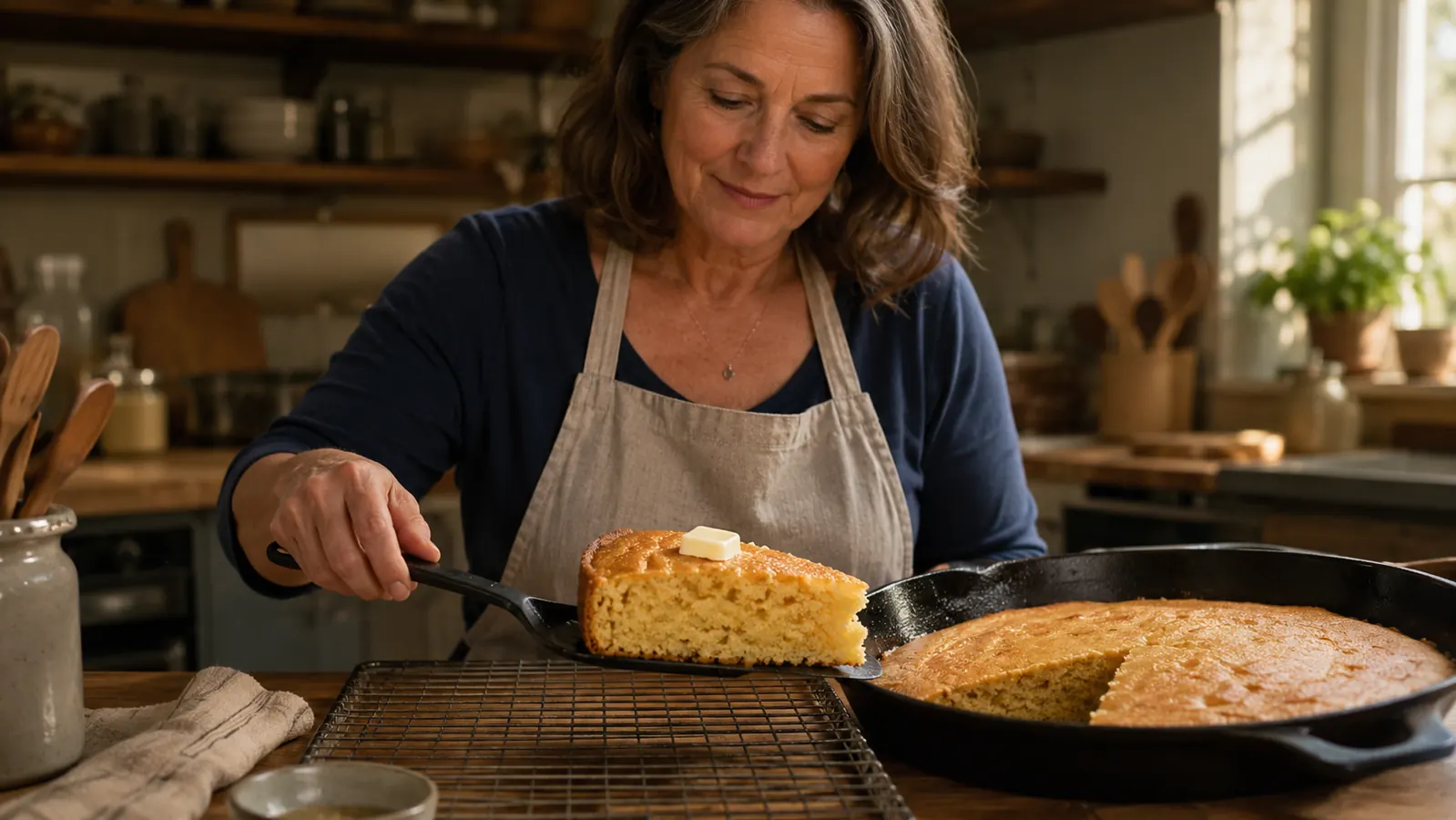
It is also the pan that sears. When I drop a cold pork chop or a wet handful of hash browns into an already-hot Lodge, the thick iron holds its temperature instead of sagging, so the outside turns brown and crisp instead of grey and steaming. That is the single thing I want most from a pan, and it is what the plain iron does better than anything else I own. Add a golden cornbread that releases cleanly and weekend potatoes my daughter takes home in a container, and you have the picture: this is the every-day workhorse, and it costs a fraction of what the pretty one does.
Where the Enameled Pan Wins
The enameled pan has one perfectly clear job where the Lodge genuinely cannot compete, and that is anything full of acid. When I simmer a slow Sunday tomato sauce, or braise short ribs in a big splash of red wine, the acid slowly eats at the seasoning on bare iron and can leave a gray, faintly metallic taste on the food and a dull spot on the pan I then have to rebuild. The enameled surface does not care one bit. It coasts through an hour of bubbling tomatoes and comes out of the pot looking exactly as it went in, and the food stays bright and clean.
It is also, and I say this honestly, easier to live with. Enameled cast iron goes in the sink with soap and warm water and a mild scrub, and you are done. No drying on the hot burner, no wiping oil back on before you hang it up. For a cook who wants a heavy, handsome pot that behaves like ordinary dishware, that is a real convenience, especially on a tired night. The tradeoff is the price and the fragility, and that is why it is not my daily pan. But for the two or three acid-heavy meals I make each month, nothing else in my cabinet does the job as calmly.
The Lodge plain skillet is the one that outlasts every other pan I own
If you cook meat and potatoes most nights, this is the first cast iron pan to buy. It sears, it gets better every year, and you can own it for a fraction of what an enameled pan costs.
Amazon Check Today's Price on Amazon →How I've Used Each Over a Real Winter
Here is what a real month looks like in my kitchen. Most weeknights the dogs are circling my ankles while I try to feed myself, and I am not in the mood for a care ritual after a long day. The Lodge gets a hard sear on whatever protein came out of the fridge, and I am not precious with it at all. If potatoes need to go with it, they all land in the same pan and the crust builds the way it only does in a heavy well-seasoned iron. That pan takes a beating, a dropped spatula, a metal spoon dragged across it once or twice, and it simply asks me to wipe a little oil in before I hang it. It is the one pan I would panic over losing.
Once a week, the winter soup or a pot of braised beef goes into the enameled pan, which sits on the back burner for three hours and needs nothing from me the whole time. That is the beauty of it. I read a book while it puts in the work, and it never threatens to react with the broth or stick, because the enamel keeps it neutral and nearly nonstick without a drop of seasoning. Neither job would be nearly as pleasant swapped to the other pan. If I ran a tomato-heavy braise in the Lodge every single week, I would be fighting the acid and seasoning twice as often, and if I used the enamel for my daily searing I would be chipping a very expensive surface, because enamel does not forgive a knocked spatula the way bare iron does.
The Two Things Nobody Tells You About Enameled Iron
First, the care difference is far less scary than the internet makes it. Washing a Lodge is warm water, a little soap, drying it on the hot burner for a minute, and rubbing a thin layer of oil in with a paper towel. That is two minutes of work and you do most of it while the burner is already cooling. The people who are afraid of cast iron are almost always the people who let it sit in the sink wet overnight. Water is the only real enemy here, it causes the rust, and rust is the one thing that sets a pan back. Keep yours dry and it will outlast you.
Second, and this is the one nobody warns you about, an enameled pan can die in a way a Lodge cannot even be injured. If the enamel chips, you are usually done for, because the bare iron under a chip will rust and the flake can make its way into your food. So the expensive pan gets treated like fine china, gentle washing, wooden utensils, never a hard knock against the sink. The cheap Lodge, by contrast, can be sanded flat and reseasoned if you manage to damage it at all. One is an heirloom you protect. The other is a workhorse that takes a beating and says thank you. That difference in how much you have to worry sits in the corner of every meal.
Who Should Buy Which
So here is the honest map. Buy the plain Lodge, the 10.25-inch pre-seasoned skillet, if you mostly sear meat, fry potatoes, make cornbread, or like me live on a rotation that rarely goes near a tomato. It is the cheaper buy by a wide margin, it sears better, it gets better every year, and at this price you do not need to think twice before bringing it home. Buy the enameled pan instead, or in addition, if you simmer tomato sauces often, braise in wine a couple of times a month, or simply refuse to do a two-minute drying ritual at the end of a meal. If your kitchen runs on Sunday sauce and weekend braises, the enameled one may well be the better first purchase, and I would not argue with you.
Most of us, after a few years, end up with both, and there is no shame in that. The plain Lodge carries the weekday weight for pennies, and the enameled pan keeps the blatantly acidic meals from wreaking their quiet damage on it. But if you only have room and budget for one, and you cook like most households I know, the Lodge is the pan that truly earns its space. It is the last one you will ever need to buy.
A Note on My Grandmother's Lodge, and Why It Wins the Argument
The enameled pan in my cabinet is newer and prettier, and on some nights I am grateful for it. But the pan that actually did the cooking for three generations of my family is the plain iron one, and nobody in my house once worried about chipping it. Through cheap apartments, one catastrophic moved house, four toddlers, and a dog who has knocked over the drying rack more times than I can count, that lightly scarred Lodge kept coming back to the table. An enameled pan would have cracked long before it earned that memory. That nose-to-the-ground reliability, more than any single meal, is what makes the plain version the better first cast iron for almost everyone, and it is why I still set out mine on the heaviest weekday mornings.
My Ten-Minute Morning Hash Browns, the Monday Through Friday Test
If you want one proof that the plain pan is the better daily tool, make my weekday hash browns in both. I put the Lodge over a medium flame, melt a pat of butter, and drop in the grated potato straight from the box. Because the iron holds its heat so stubbornly, the shreds sit still just long enough to build a golden crust before anyone touches them, and they release cleanly with a spatula. In the enameled pan, the same potatoes come out paler and a little stickier, not because the enamel is bad but because it does not hold the same even heat at that low a flame. On a school morning that is the difference between a real breakfast and a shrug, and it is the ugliest, most common job a skillet is asked to do.
That is not a point against the enameled pan, because it was never built for this. It is just a reminder that the word pan hides two very different creatures, and the one that shines at glossy Sunday braises is not the one that quietly wins every Tuesday. For the price other people spend on a single enameled vessel, you can own the Lodge now and still have most of the money left over for good butter and better bacon.
Start with the one that sears, ages well, and costs a fraction of the rest
The plain Lodge 10.25-inch skillet does 90 percent of my stove-top cooking and only gets better with time. Check today's price and see for yourself why it is the pan I would never replace.
Amazon Check Today's Price on Amazon →