For forty years I cooked on nonstick pans the way I was told to: low to medium heat, a silicone spatula, gentle hands, and a fresh pan every couple of years when the coating finally flaked and the eggs started to stick. That cycle wore me out. I bought my first Lodge cast iron skillet in 2016 out of plain stubbornness, one 10.25-inch pre-seasoned pan, the basic model with the smooth factory seasoning on its pour. That single purchase has now outlived every nonstick skillet I owned before it, and it cooks better today than it did the day it arrived.
I cook most days. My husband, our two dogs underfoot, one of them a golden retriever who believes dropped food is the entire point of dinner, the books I read stacked on the end of the counter, the whole business of keeping a home. This one Lodge skillet has done the heavy lifting for nearly a decade: the Friday-night ribeye, Sunday cornbread, hash browns on a slow Tuesday, a frittata that slid out whole and innocent, nothing a knife has ever scratched. It has earned its place on my stove more completely than any appliance in the house, and after years with it, I want to tell you plainly what that purchase is really like, the good and the honest tradeoffs.
The Quick Verdict
The Lodge 10.25-inch cast iron skillet is the last pan I expect to buy, and the one I plan to hand down. It sears better than anything I own, improves with use, and costs less than a good dinner out. Its weight and its learning curve are the only real costs, and both vanished for me within a month.
Amazon Check Today's Price →The Pan That Ended My Replacement Cycle
If you are tired of buying the same nonstick skillet every couple of years, this is the one purchase that stops the cycle. A Lodge pre-seasoned skillet arrives ready to cook on, and gets better with every meal you put in it.
Amazon Check Today's Price on Amazon →How I've Used It
This is not a pan I babied. It sits on my rear burner most days, heavy enough that I leave it in place and cook around it. On a typical week it sees use four or five times. The skillet goes in the oven for cornbread and for a braise I keep meaning to write down, back on the stovetop for a sear, then into the sink for a scrub with a handful of coarse salt and warm water. There have been weeks I traveled, weeks I let it sit, and never once has it refused me on return. It does not care about being neglected the way a nonstick pan does.
The first month was genuinely different. I had to unlearn the nonstick reflex. You preheat cast iron slowly and longer, you do not blast it on high, and you get used to hearing a little resistance before the food decides to release. My early eggs stuck in a way that made me want to throw the thing across the kitchen. That was the test, and I passed it the way everyone does: by cooking enough, letting a crust form, and learning that a stuck moment is usually a hurry moment, not a failure of the Lodge itself. Give the food a minute and the pan releases it on its own, the way it was always going to.
The pan cares for the ordinary meals too, not just the showstopper Friday-night steak. A weekday frittata with whatever was in the fridge, half an onion, a handful of wilted spinach, some cheese that needed using, goes in at a gentle medium, and the whole thing releases off the bottom clean. My son came over one wet Thursday and I browned a package of chicken thighs, deglazed with a shallow pour of white wine and a spoon of mustard, onions until they softened, and had a real skillet supper on the table in under forty minutes with one pan to wash. Diligence like that, week after week, is what built the glossy dark surface the pan wears now. Every meal contributed, the dramatic ones and the forgettable ones.
Now, hands down, the single thing that surprised me most is that the cooking surface got smoother and slicker the more I used it. A cast iron skillet does not wear out. It seasons. The layer of oil and heat that builds on the surface is the whole secret, and after years it behaves like a surface that has been treated right its whole life, which it has, because it was. My daughter calls it the old friend of the kitchen, and she is not wrong. It is the rare tool that gets more valuable with age instead of less, the way a good pair of reading glasses or a well-loved cookbook does. I reach for it first, always, and the rest of my cookware has noticed.

Why I Reach for It Before the Nonstick, Every Time
The real difference is heat. Nonstick pans scare you into low flames because the coating and the aluminum underneath simply cannot take it. Cast iron holds its heat in a way that changes the food. You preheat the Lodge for a few patient minutes on medium, then a steak goes in, and the pan does not drop temperature the moment it touches something cold and wet from the fridge. That steady, stored heat is the difference between a decent sear and the kind of crust that makes you wonder why you ever paid extra for a cut of meat.
Lodge has made cast iron the same way for decades, which is its own kind of quiet reassurance. The pan is one solid pour, no coating to chip, nothing to off-gas, no PFAS in the factory seasoning they apply. What arrives in the box is honest and built to be used for a lifetime. The 10.25-inch size is the one I would buy again without hesitation. It fits a whole chicken, a family-size frittata, four eggs and toast, a full ribeye, and it is not so heavy that my late-fifties hands dread lifting it across the two inches of stove gap. The well in the handle hangs from an S-hook on my pot rack; the only mark of ten years is a faint polished shine where my thumb rests.
There is also something to be said for how much faster it makes my week. Because the Lodge stays seasoned and ready, I spend far less time coaxing stubborn nonstick coatings back to life or worrying about a scratched surface. When the dish is done, the skillet cools, gets a salt scrub and a thin slick of oil, and it is ready for tomorrow. It is the closest I have come, in a kitchen full of conveniences, to a tool that largely looks after itself. A nonstick pan asks a lot and gives back a few good years. This one asks a small ritual at the sink and gives back a lifetime.
Cornbread, Hash Browns, and the Seasoning That Only Gets Better
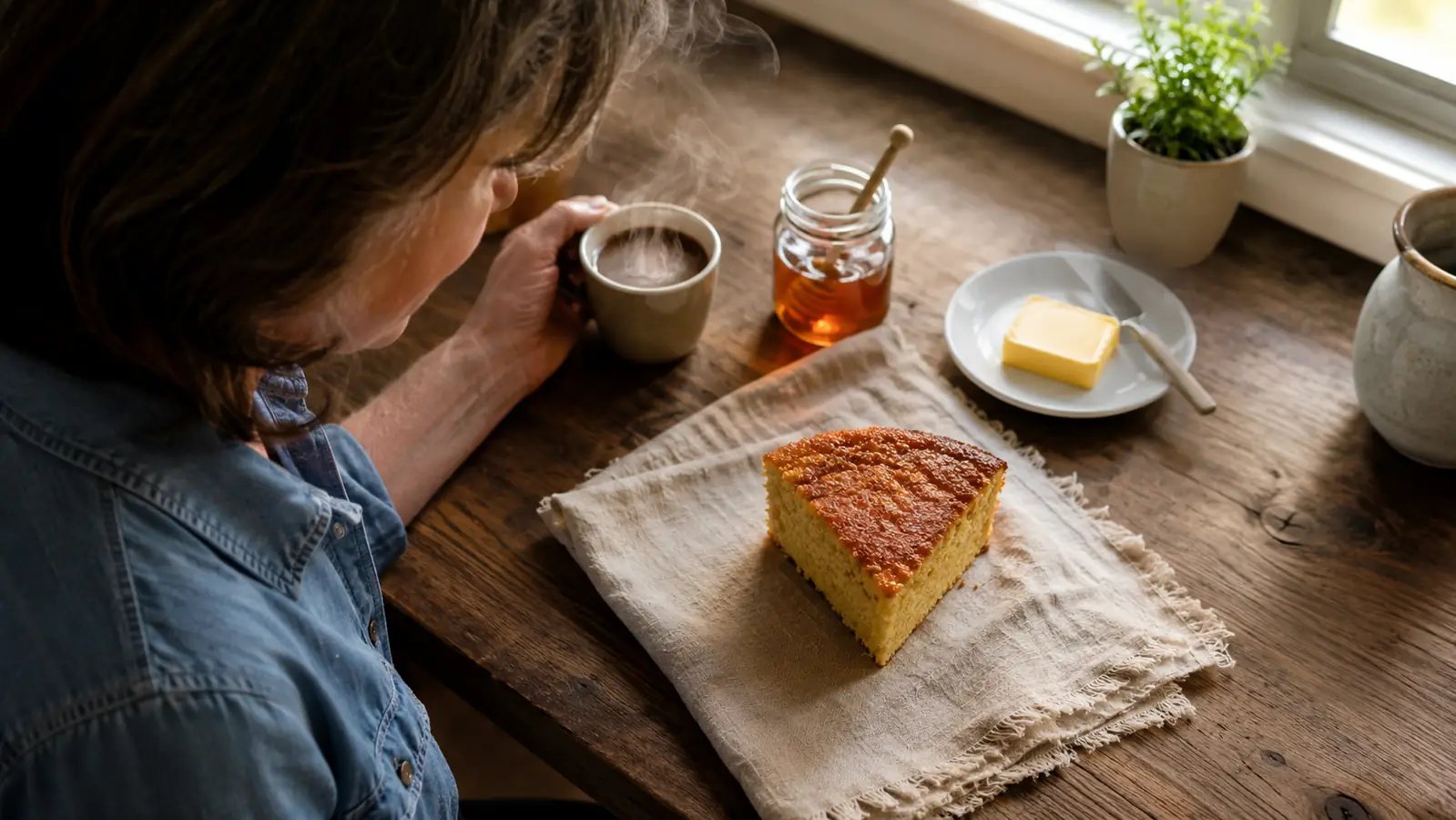
Cornbread is the skillet's best-known trick, and it is not hype. A Lodge pan preheated in a hot oven, then meets a buttered cornbread batter, gives that crust a deep golden color and a crisp edge that no glass or ceramic dish ever has. I bake it in the skillet and serve it straight from the same pan at Sunday lunch, a cotton napkin wrapped under the hot side, everyone tearing off a piece at the table. The person you would expect to have opinions about cornbread, my mother-in-law, who cooked her whole married life on her own cast iron and who is not easy to impress, has never once sent a piece back to the kitchen.
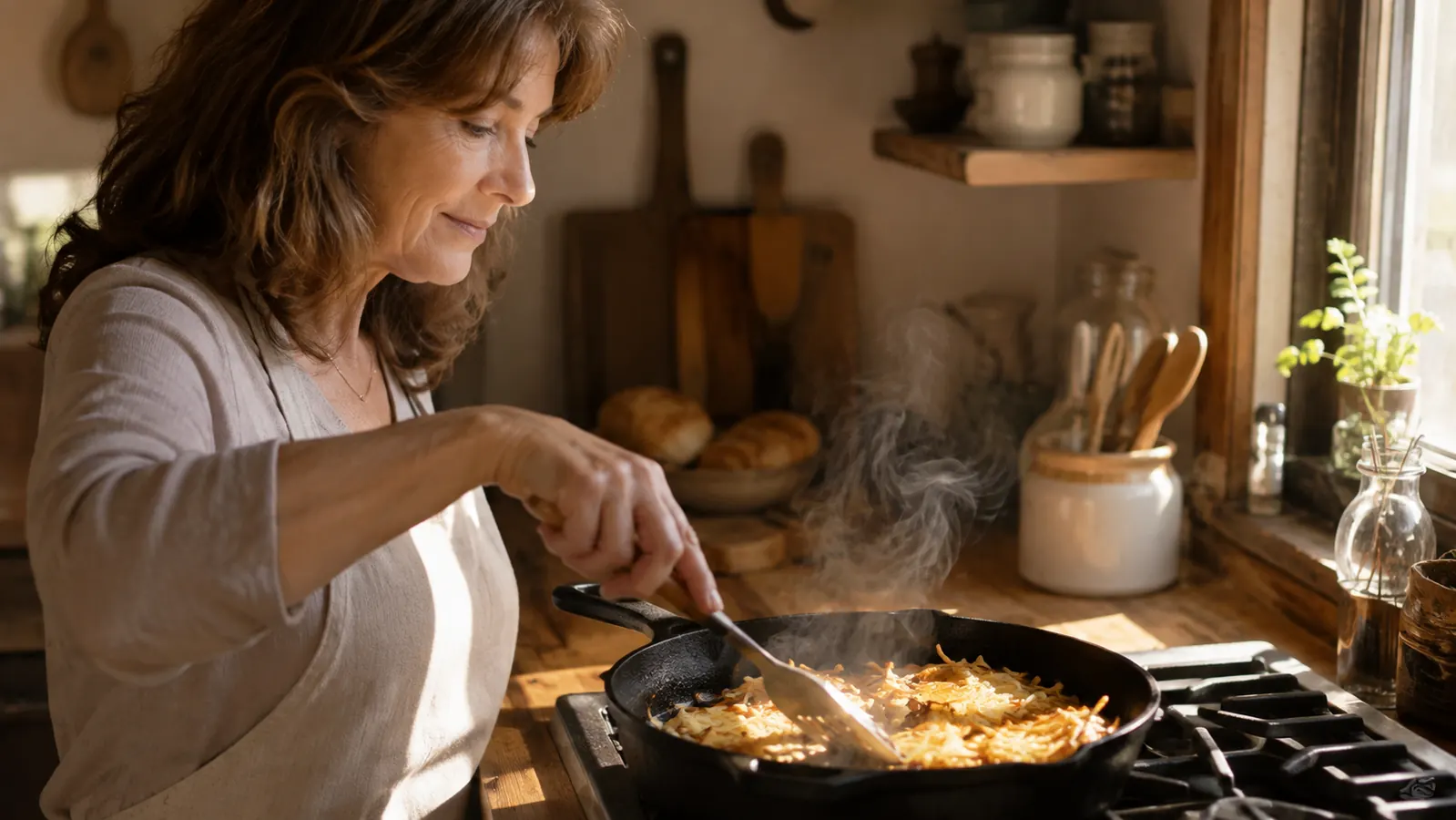
Hash browns were the skill that took the longest, because shredded potatoes cling to a pan that is too impatient. The trick I settled on is to dry the shredded potato well in a clean towel, get the skillet properly hot first, add a thin film of oil, then spread the potatoes out and leave them alone until the bottom releases. I have done this enough Tuesdays that it is muscle memory now, and the crust I get is the kind people notice and then ask about at potlucks, the outside crisp and burnished, the inside soft and steamy. I do not even think about the steps anymore, the way you stop thinking about a recipe you have made two hundred times.
Over a decade the seasoning on my Lodge has built into something dark and glossy, a surface my mother would recognize as a well-cared-for pan. That layer is the whole reason the skillet keeps releasing eggs and sliding a breakfast around practically on its own. It is also why I get a little impatient with people who insist cast iron is difficult. It is not difficult. It is patient, the way everything worth keeping in a house is patient. You do not master it in a night. You let it become yours across months, and it repays every bit of that patience in the years after.
I bought this skillet in 2016, and it has outlived every nonstick pan I owned before it. It cooks better now than it did the day it arrived.
The Tradeoffs You Should Hear Straight From Me
I do not want to oversell this pan, because it is not for everyone, and pretending otherwise is exactly the kind of sales talk that makes me distrust a review. First, the weight is real. At 10.25 inches it is heavy enough that grabbing the handle with one hand and pivoting is fine, but tilting it to pour off bacon fat takes two hands and care. If you have limited grip strength or a shoulder that protests, an 8-inch Lodge or a lighter alternative is worth thinking about before this size.
Second, cleaning is not a thirty-second glide like a nonstick pan. I scrub with coarse salt and warm water more often than not, dry it thoroughly, and put back a thin coat of oil. It is maybe ninety extra seconds, and it absolutely matters. What you cannot do is leave it wet in the sink or run it through the dishwasher and expect it to thank you. There are enameled cast iron pans that dodge this chore, but you pay for that luxury and they do not sear quite the same way.
Third, until the seasoning has some years behind it, the pan is hard on acidic foods. A bright tomato sauce simmered for an hour in a young skillet can pull at the seasoning and leave a faint metallic taste. Once my pan was well seasoned, a quick simmer of tomatoes stopped being a worry, but it is worth knowing up front. Use your enameled or stainless pot for a long ragu in the early months, and this pan for the sear and the finishing.
Finally, preheating is a habit, not an instinct. You cannot crank a cast iron skillet to high and walk away, the way the aluminum world lets you. The pan takes longer to come up, and it holds more heat once there. My own habit is to set it to a gentle medium and start my prep, so by the time the chopping is done the surface is ready waiting for me. For a cook who wants instant results, the patience is a real adjustment. Give it a month and it stops feeling like a chore, the same way a sourdough starter stops feeling like a chore once you know its rhythm. Then the two of you are in it together for a long, long time.
What I Liked
- Outstanding sear and steady stored heat that exceeds any nonstick pan
- Costs a fraction of a good nonstick set and simply does not wear out
- Seasoning improves with use for years instead of degrading
- Oven-safe, stovetop-safe, dishwasher-free forever, no coating to chip
- Simple factory pre-seasoning means it works out of the box
- One solid pour, no PFAS, built to be passed down
Where It Falls Short
- Heavy enough that tilting and lifting properly takes two hands
- Needs a salt scrub, a dry, and a thin oil coat rather than a rinse
- Harsh on long acidic braises until the seasoning matures
- Requires the patience of a slow preheat it does not reward instantly
Who This Is For
This is for the cook who is tired of buying the same pan twice a decade, who wants one tool that sears a steak, bakes cornbread, fries an egg, and will still be hanging on the hook on her eighty-fifth birthday. It is for the person who does not mind a small ritual of care at the sink because they would rather have half a dozen honest, lasting tools than a drawer full of disposables. If you cook most days, keep a real kitchen, and would rather spend your money once than twice, the Lodge 10.25-inch is the quiet answer. It is the piece I reach past all the newer, shinier cookware to grab, every day, without a second thought.
Who Should Skip It
Skip it if you want a light pan you can toss with one hand, or if you will not develop the habit of drying and oiling after each wash, because a neglected cast iron pan turns into a rusted, disappointing one and that is not a pleasant lesson. Skip it if nearly every cooked meal is a long, acidic tomato dish, especially from a young pan before the seasoning matures. And honestly, if you have a painful shoulder or a slippery grip, start with the smaller 8-inch skillet rather than this one. There is a version of cast iron that fits your grip, just not the heaviest of the lot, and that is no mark against the pan. It is just leaving the right tool for your hands.
The Last Pan You Are Likely to Buy
Ten years in, my Lodge skillet is the one piece of cookware I would replace tomorrow if I lost it, and the only one I intend to hand down. If you cook most days and want a pan that repays you for a decade, this is it.
Amazon Check Today's Price on Amazon →