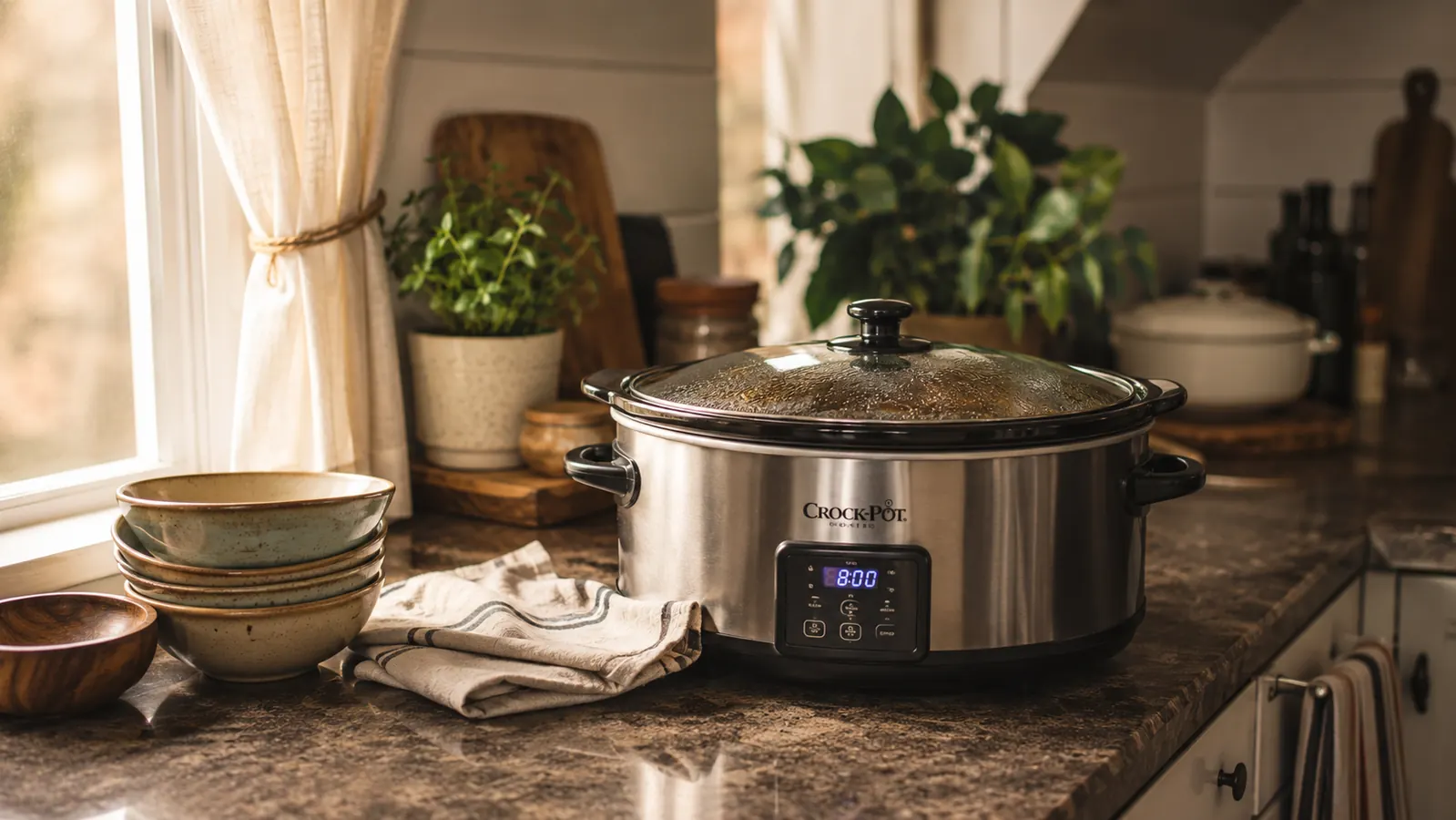
My neighbor Jane pushed Crock-Pot slow cookers at me for two years before I gave in. I am a cook, I told her. I do not need a pot that will cook a roast while nobody watches. But on a March Thursday, with dinner due at six, the dogs wound around my legs, and nothing started, I borrowed hers. Three hours later we ate chili from a kitchen that stayed clean, and I had not touched a spoon since noon. A few weeks after that I bought my own Crock-Pot 7-quart manual slow cooker, and this is the long view after years of near-weekly use, not the first-week thrill.
The short version reads like an ad, so let me give you the plain one. It is a big stoneware pot on a heating base with High, Warm, Low, and Off. There is no screen to scroll, no menu to learn, no countdown to set by accident, nothing clever to go wrong. You put your meat and a little liquid in before noon, set it to Low, and come back to dinner. That is the whole trick, and it is exactly why this one never wears out the way a gadget does. It is not exciting. That is the point.
The Quick Verdict
After years of set-and-forget cooking, the 7-quart manual Crock-Pot is the most reliable thing in my kitchen. It feeds eight people and cleans up like a plain pot. It cannot brown or sear, so I sometimes do that first on the stove, but I have never once wished it were a gadget.
Amazon Check Today's Price →The slow cooker that actually feeds the week
Eight-plus servings from one ceramic pot, High and Low and nothing to memorize. If reliable and dead simple is what you want from a slow cooker, today's price on Amazon is the honest place to start, no fine print.
Amazon Check Today's Price on Amazon →How I've Used It
In a normal week this pot runs twice, sometimes three times. The standing rotation is a pot of chili on Sunday so the house smells right all afternoon, and a bone broth on the nights I want stock without standing over a stove. My house is three of us plus whoever appears for supper, and seven quarts means I cook once and eat for days. That is the honest math that keeps a big slow cooker on my shelf. One Sunday feed turns into Monday leftovers, a frozen container or two, and a stockpot worth of broth from the same bones.
The size matters more than I expected. Seven quarts honestly handles a whole chicken, a four-pound roast, or a double batch of soup for the freezer. It genuinely serves eight, as advertised, and I have proved it at two family dinners where a full table emptied the pot without a second pass. It also meant I stopped reaching for my big stockpot for broth, because the Crock-Pot holds more and watches itself. If you are deciding on the size, I would rather own a pot a little too big than a little too small, but I will be honest that it is heavy when full and wants real cabinet space. I keep mine in the low cabinet under the counter and lift it out for the weekend rotation.
The manual controls are honestly my favorite part. Low for the all-day cooks, High when I am late and need it faster, Warm to hold a meal until a guest arrives. I have never once wished for a countdown timer, because the whole point of this appliance is that you stop checking the clock. On the days I cook while I am at the library or out with the dogs, I set it Low in the morning and forget it, and I have never come home to a ruined dinner in the years I have owned it.
Why the Manual One, Not the Fancy One
There are programmable slow cookers with digital screens, timers that switch to Warm on their own, and app-connected models that I genuinely do not understand the point of. I chose the plain manual one, and here is my honest reasoning. Every extra feature is one more thing to go wrong, one more button to press by accident, and one more way the machine can disagree with you when you are tired. A manual dial cannot overthink a cheap chuck roast. It is a heat source and a rheostat, and the thermostat inside a Crock-Pot is proven across decades of family kitchens. That durability is worth more to me than a screen that tells me dinner is ready, because I can smell when dinner is ready.
I am not saying the programmable models are bad. If your life runs on a timer and you want dinner exactly at six whether you are home at four or not, the extra cost buys you real peace of mind, and I can see the argument. But the trade keeps coming back to the same place. The more that can beep, the more that can break, and a far larger share of the slow cookers I read about being replaced are the ones with the screens. The manual Crock-Pot is the one the hand-me-downs are made of.
What It Does Best in the Long Run
The bone broth is the thing I never expected to depend on. I save the bones and the ends of vegetables, fill the pot with water, add a splash of vinegar, and set it Low for eighteen hours. In the morning I strain it and have a rich golden stock the color of autumn, with a gelatin that sets firm in the fridge. Now the Crock-Pot does it while I sleep or read, and the result is honestly better, because the low steady heat pulls more from the bones without ever boiling it cloudy. That single use has paid for the appliance in my mind many times over.
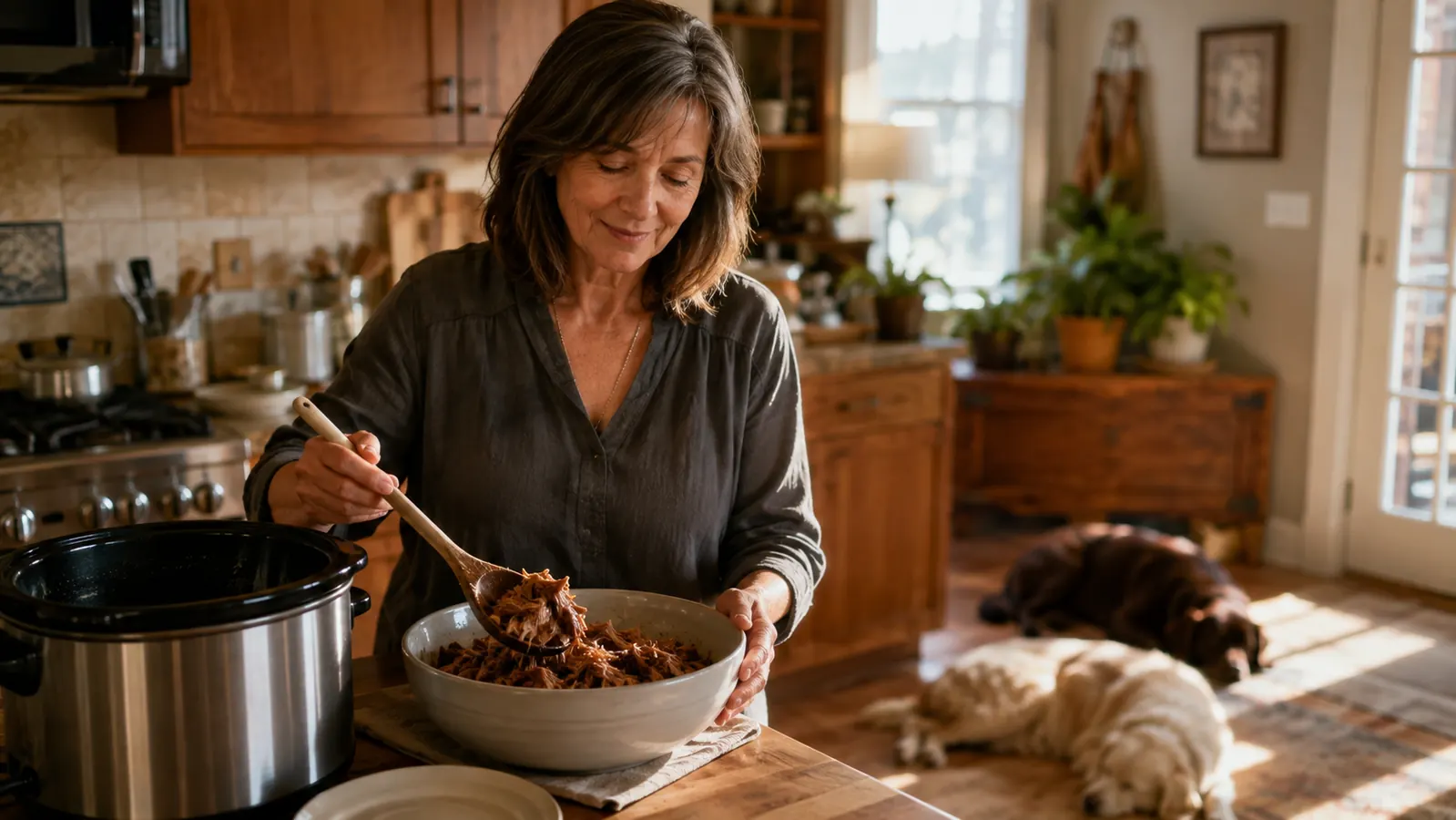
The other strength is fall-apart meat. A pork shoulder or a chuck roast set on Low for eight hours pulls apart with two forks, the kind of tender that braising in the oven can match but never beats on a day when you are not home to mind the oven. And because it is Low and slow, it hums along on very little electricity. Running my big wall oven for six hours to braise one roast feels like a waste now that this pot does the same job on a fraction of the energy. That is a quiet long-run win nobody puts on the box.
Over the years the results have not softened, which tells me the heating element and the thermal fuse are doing their job. The stoneware insert has no cracks after years of hot-to-cold cycles, and the base keeps up a steady gentle bubble at Low the same way it did on week one. Set-and-forget cooking rewards patience, and this pot has repaid mine every single time.
The Sunday Batch I Come Back To
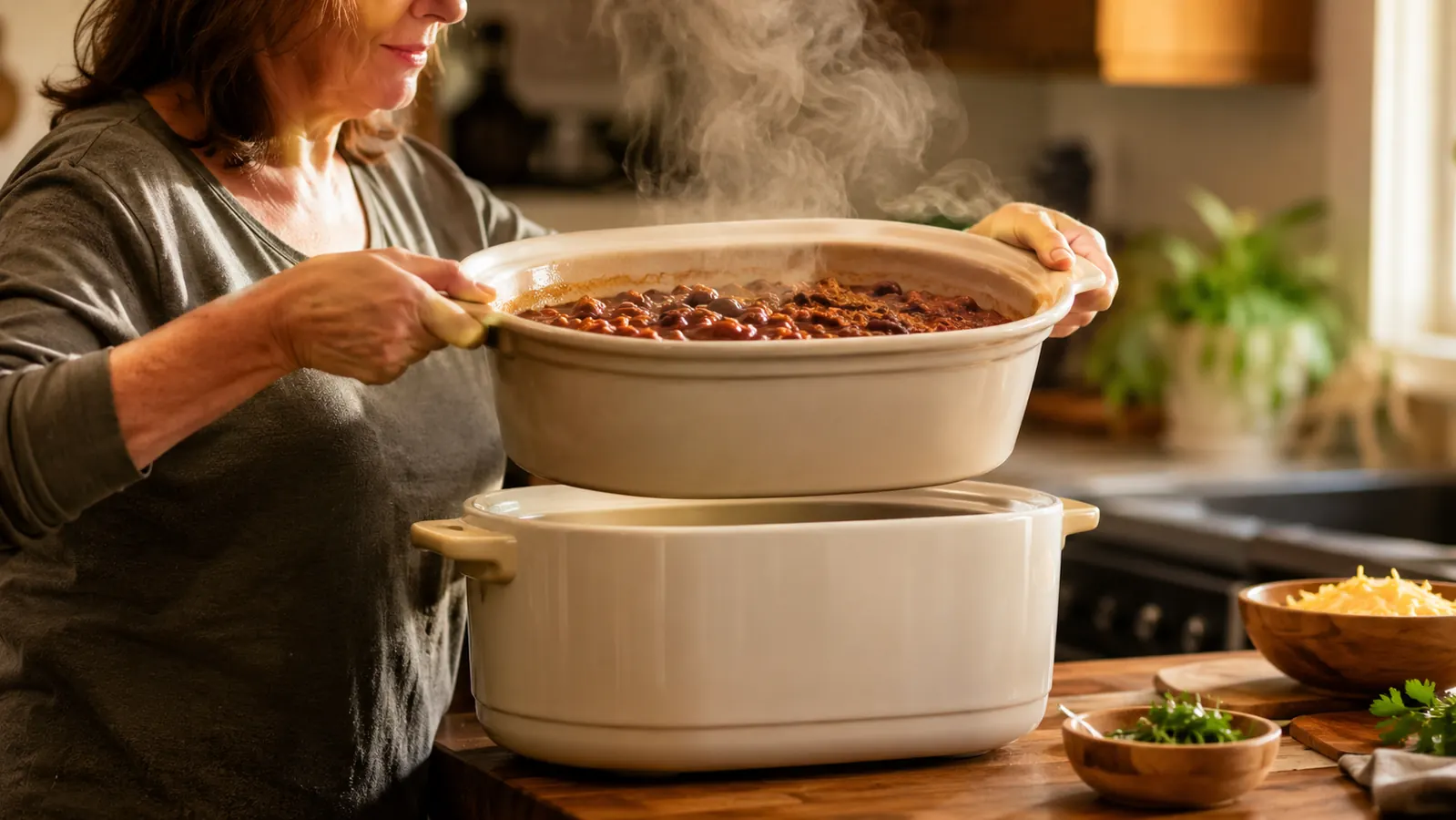
If I had to prove this pot earns its cabinet space, it is the double batch of chili I cook every other Sunday. Two pounds of browned beef, a big can of crushed tomatoes, three cans of beans, a chopped onion, garlic, and enough chili powder to turn a spoon orange. It fills the stoneware to the top. On Low it blips along from noon to six, and by dinnertime the house smells the way a kitchen should. Some of it goes in bowls that night, more goes into two freezer containers, and the last of it becomes tomorrow's lunch over rice.
That is the real case for a seven-quart pot in a home of three. Cooking one big batch at a time, instead of two or three small ones, is how the freezer fills without you doing anything clever. When I was newer to slow cooking I bought a three-quart and regretted it within a month. The bigger pot does not ask you to do more. It just lets you cook once and rest.
How It Handles the Cleaning Routine
Cleaning is where a lot of small appliances lose me, and this one mostly does not. The stoneware insert lifts out of the base, and neither the lid nor the pot is wired to anything, so you are holding a plain ceramic bowl. I wash it by hand with hot soapy water and a soft sponge, and years in there is no stain on the white interior that hot water will not lift. The lid wipes clean in a minute. The heating base only needs a wipe around the rim where a drop of stew might have bubbled over. Two dishes to wash, no nooks, no gaskets to fish a bit of food out of.
The honest catch is the lifting. A full seven quarts of chili is genuinely heavy, and moving it from the base to the counter to the sink is the one part of my routine that still asks a little of me. I do it in two stages. I let the pot cool, ladle the leftovers out first so I am not hauling a full pot of liquid, then lift a much lighter empty insert to wash it. But I would not hand this size to someone with real trouble lifting or with a shoulder injury. For that, the smaller pot is the kinder job.
Where It Tests My Patience
Now the honest downsides, because a review that skips them does you no good. This pot does not brown anything. It cooks at a gentle simmer, so a roast comes out tender but pale, and a stew lacks the deep caramelized color that searing gives you first. I have learned to brown the meat in a skillet on the stove before it goes in, and that extra pan on the counter is the small cost of that deep flavor. It is one more step and one more skillet to wash, and I will not pretend it is not there. If the idea of browning first bothers you, honestly buy a multicooker instead.
The stoneware insert is heavy and it is not a light job to lift a full seven quarts. It will not fit in most dishwashers, so I wash it by hand, and five pounds of warm pot plus bubbles is a real handful when your hands are older than the appliance. And because this is a manual model, it has no automatic Warm switchover. If I stretch a cook past twelve hours on Low, liquid can cook down and the edge of a roast can dry. I have learned my window and I stay inside it, but a timer model would forgive a busy day that mine will not.
One more plain truth. Water collects under the lid on day-long cooks, and the rim sweats, so you will wipe the counter under it. It is a slow cooker, not a sealed pressure vessel, so moisture finds its way out. It has left a damp ring on my counter every single year, and no review I read before buying ever mentioned it. I say it here so you are not surprised by it after your own first month.
Eight hours on Low turned a four-pound chuck roast into two-fork tender meat while I was out with the dogs and never once near the kitchen.
What I Liked
- Genuinely serves eight and feeds a household for days from one pot
- Simple High, Low, and Warm controls with nothing clever to break
- Low, slow cooking runs on very little electricity
- Makes hands-off bone broth and fall-apart meat better than my oven
- A durable stoneware insert that has lasted years without a crack
Where It Falls Short
- It does not brown or sear, so some recipes need a skillet first
- The full stoneware insert is heavy to lift and hand-wash only
- No timer, so a very long cook can dry the edge of a roast
- The lid sweats and collects water on the counter on day-long cooks
- Seven quarts is a large pot that wants real cabinet space
Who This Is For
This is for the cook who wants a real meal at the end of a busy day without hovering over a stove, and who feeds more than two people at a stretch. If your household is three or more, or you like cooking once for leftovers and the freezer, the 7-quart is the honest size and it earns its cabinet home. It is also the right choice if you distrust gadgets, because this is the least gadget-like appliance I own. And it is for the person who wants one tool to keep for the long haul, the way a good cast iron pan or a heavy stockpot is kept. This Crock-Pot is built to be that pot.
Who Should Skip It
Skip it if you cook for one or two and eat the same thing the next day reluctantly, because a full seven-quart pot is a lot of future meals you may not want. Skip it if you cannot stand washing a large pot by hand, because the insert is dishwasher-awkward and heavy. And skip it if you want that caramelized sear in the same appliance, because no slow cooker will give you that. If you want one pot to brown and slow-cook and pressure-cook all in one, look at a multicooker instead.
Years in, this is the pot I still reach for
After years of near-weekly chili, broth, and fall-apart Sunday roasts, the manual Crock-Pot shows no real wear and no sign of giving up. If you are ready to stop babysitting dinner and you want a slow cooker that will outlast the fads, today's price on Amazon is the honest place to begin. It is the one I plan to keep.
Amazon Check Today's Price on Amazon →